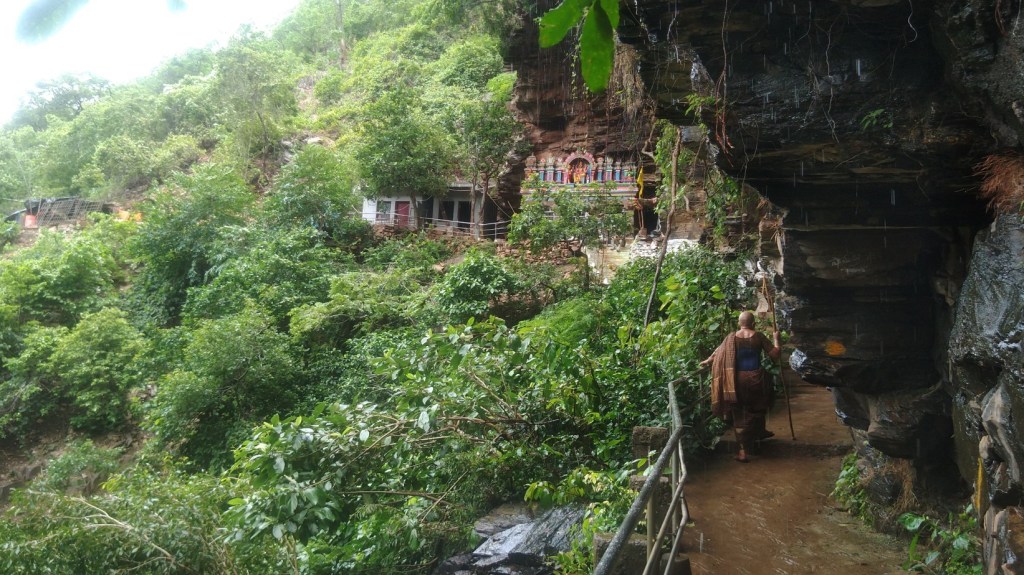
Quick Overview
Best Time to Visit: October to February
Weather: Pleasant winters, hot summers, humid monsoons
Budget: ₹1,000–₹5,000/day
Plan Your Trip
Getting There
Nearest Airport: Kadapa Airport (90 km away)
Nearest railway station: Nandyal Railway Station (65 km)
By Road: Well-connected via NH40; buses and cabs available from Hyderabad, Bengaluru, and Chennai
Where to Stay?
Lower and Upper Ahobilam – Basic lodges and temple guesthouses for budget travelers
Nearby Towns (Allagadda or Nandyal) – More hotel options with better amenities
Packing List
- Light woollens for early mornings and evenings
- Comfortable trekking shoes
- Raincoat or umbrella during monsoon
- Sunscreen, hat, and sunglasses
- Reusable water bottle and energy snacks
Top Places to Visit
Lakshmi Narasimha Swamy Temple
The main temple in Lower Ahobilam, known for its grand gopuram and ancient architecture.
Jwala Narasimha Temple
Located near a waterfall in Upper Ahobilam, this shrine is considered the fiercest form of the deity.
Ugra Sthambham
A steep trek leads to this pillar on a cliff, believed to be where Lord Narasimha appeared.
Malola Narasimha Temple
A peaceful shrine nestled among hills, representing the affectionate form of the deity.
Prahlada Mettu
A cave shrine believed to be where Prahlada meditated and worshipped Lord Vishnu.
Bhargava and Pavana Narasimha Temples
Remote and serene, these shrines are ideal for quiet reflection during your trek.
Must-Try Experiences
Nava Narasimha Darshan
Trek through forests and hills to visit all nine forms of Lord Narasimha across Lower and Upper Ahobilam.
Temple Treks
Enjoy scenic treks through thick forests, gorges, and rocky trails leading to ancient shrines.
Community Meals
Experience the traditional satvik meals served at temple kitchens—simple, wholesome, and soul-satisfying.
Local Cuisine
Breakfast: Idli, dosa, and upma with spicy chutneys
Lunch: Pulihora (tamarind rice), curd rice, and traditional temple prasad
Snacks: Sundal, vada, and dry fruits for the trek
Carry your own snacks and water while trekking. Shops are limited along the way
Culture & Local Life
Ahobilam is one of the 108 Divya Desams, sacred shrines dedicated to Lord Vishnu. It’s deeply spiritual and also steeped in local tribal culture. The forest-dwelling Chenchu community plays a key role in temple rituals. The region hosts grand festivals like Brahmotsavam, Narasimha Jayanthi, and the unique Paruveta Utsavam, a ceremonial reenactment of a divine hunt.
Local Insights
Languages: Telugu (primary), Hindi and English widely understood
Getting Around: Local autos from Lower to Upper Ahobilam; on foot for treks
Safety Tips: Trek in groups, especially through forest areas; mobile network is unreliable in Upper Ahobilam
Health Tips: Carry basic first aid, stay hydrated, and avoid trekking alone during monsoons
Enjoy Your Yatra!
 TheeraYatra
Leave a comment