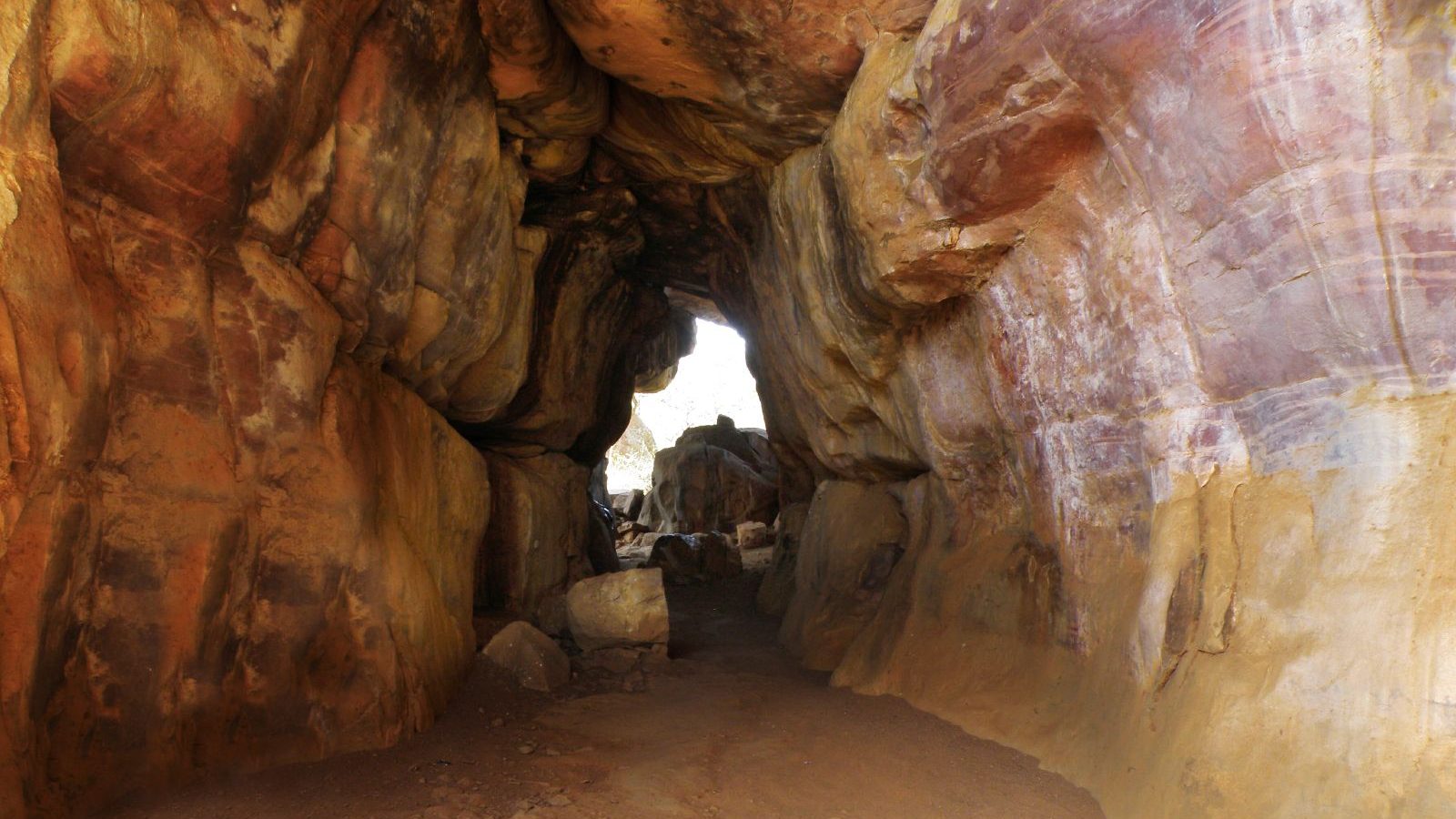
Quick Overview
Best Time to Visit: October to March
Weather: Hot summers, pleasant winters, moderate monsoons
Budget: ₹1,500–₹6,000/day
Speciality: UNESCO World Heritage Site with 30,000-year-old rock art
Plan Your Trip
Getting There
Nearest Airport: Raja Bhoj Airport, Bhopal, ~55 km from Bhimbetka
By Train: Bhopal Junction (47 km) and Habibganj Railway Station (45 km) are the nearest major stations
By Road: Well-connected via NH-46; 45 km south of Bhopal on Bhopal-Hoshangabad highway; buses and cabs available
Where to Stay?
Near Bhimbetka – MP Tourism’s Highway Treat resort offers basic accommodation close to the site
Bhopal City – wide range of hotels from budget to luxury, restaurants, and better connectivity
Packing List
- Comfortable walking shoes for rocky terrain
- Light cotton clothing
- Sun hat and sunglasses
- Sunscreen and insect repellent
- Water bottle
- Camera for photography
Top Places to Visit
Auditorium Cave
The largest rock shelter at Bhimbetka with cathedral-like atmosphere, soaring spaces and Gothic arches. Features ancient engravings and the famous Chief’s Rock at its entrance.
Zoo Rock Shelter
The most densely painted rock shelter with artworks spanning from Mesolithic to Medieval period. Depicts animals like elephants, rhinoceros, boar, deer, cattle and snakes.
Turtle Rock
Named for its distinctive turtle-shaped formation, this site contains paintings from various periods showing the evolution of prehistoric art over millennia.
Prehistoric Cave Paintings
Over 500 rock shelters adorned with paintings dating back 30,000 years. Scenes depict hunting, dancing, animals, and daily life of ancient humans in red, white, green and yellow pigments.
Ratapani Wildlife Sanctuary
Surrounding forest reserve home to tigers, leopards, deer, and over 150 bird species. Dense teak forests with trekking trails and natural beauty.
Bhojeshwar Temple, Bhojpur
28 km from Bhimbetka, this 11th-century incomplete Shiva temple houses one of the largest lingams in India at 7.5 feet tall, carved from a single stone.
Sanchi Stupa
46 km from Bhimbetka, this UNESCO World Heritage Buddhist complex features the Great Stupa commissioned by Emperor Ashoka in 3rd century BCE with intricately carved gateways.
Raisen Fort
800-year-old hilltop fort with nine gateways, ancient palaces, temples, and panoramic views. Known for its water management system and medieval architecture.
Must-Try Experiences
Guided Heritage Walk
Take a guided tour to understand the significance of rock paintings and learn about prehistoric human civilization and artistic evolution.
Nature Photography
Capture the striking rock formations, ancient paintings, and the dense forest landscape. The famous red bison painting is visible only in specific sunlight.
Wildlife Safari
Explore Ratapani Wildlife Sanctuary for tiger sightings, birdwatching, and experiencing the untouched forests of Vindhya Range.
Visit Buddhist Heritage
Explore Sanchi Stupa to witness ancient Buddhist architecture, Ashoka Pillar with the national emblem, and intricate stone carvings.
Temple Trail
Visit the massive Bhojeshwar Temple to see unique 11th-century architecture and experience Maha Shivaratri celebrations.
Local Cuisine
Breakfast: Poha-jalebi, samosa, kachori
Lunch: Dal bafla, bhutte ka kees, kebabs
Snacks: Sabudana khichdi, aloo tikki, chaat
Note: Limited food options near Bhimbetka; better restaurants available in Bhopal. Local dhabas serve authentic Madhya Pradesh cuisine.
Culture & Local Life
Bhimbetka represents humanity’s earliest artistic expressions and provides insights into prehistoric human settlement patterns. The name derives from Bhima, one of the Pandavas from Mahabharata, meaning “Bhima’s resting place.”
The cultural traditions of villages surrounding Bhimbetka bear striking resemblance to those depicted in the rock paintings, showing continuity of local customs over thousands of years. The site reflects the evolution from nomadic hunter-gatherers to settled agricultural communities.
Archaeological evidence shows continuous human habitation from Paleolithic period through Mesolithic to historic times, making it one of the longest continuously inhabited sites in the world.
Local Insights
Languages: Hindi (primary), English understood at tourist sites
Getting Around: Private vehicles, taxis, and hired guides available; walking required inside the site on rocky paths
Timings: Bhimbetka Rock Shelters open from sunrise to sunset (approximately 6:30 AM to 5:30 PM)
Entry Fee: Nominal entry fee of ₹200-300 for Indian nationals
Safety Tips: Wear sturdy shoes for uneven rocky terrain; carry water; hire authorized guides for better understanding; avoid monsoon season due to slippery paths
Photography: Allowed; best lighting for cave paintings in morning hours
Enjoy Your Yatra!
 TheeraYatra
Leave a comment