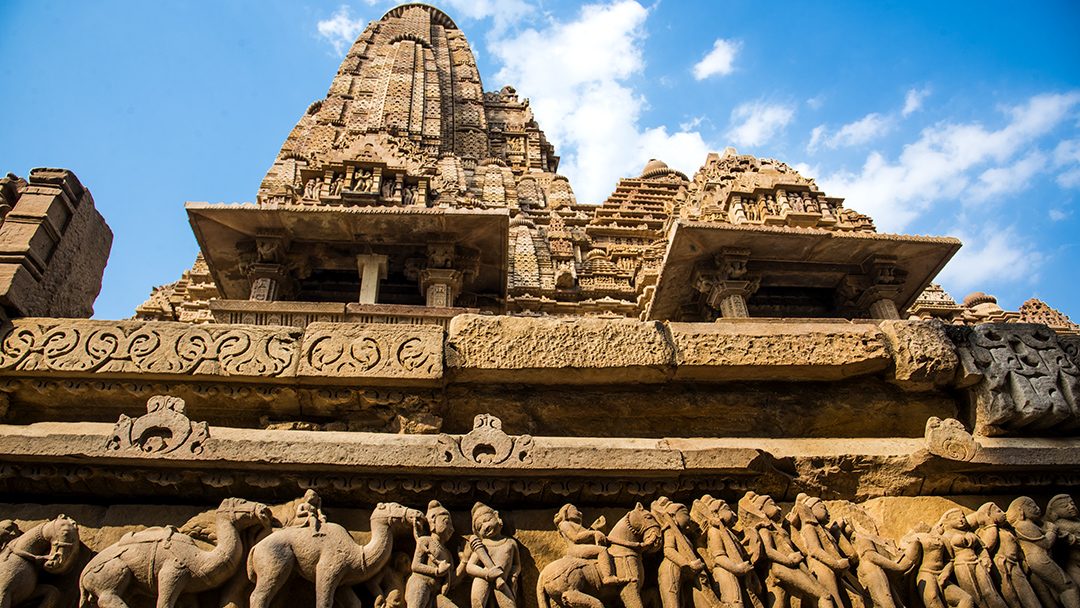
Quick Overview
Best Time to Visit: October to February
Weather: Hot summers, pleasant winters
Budget: ₹2,000–₹8,000/day
Speciality: UNESCO World Heritage Site with Iconic Temple Architecture
Plan Your Trip
Getting There
Nearest Airport: Khajuraho Airport, ~5 km from city center
By Train: Khajuraho Railway Station connects to Delhi, Varanasi, Jhansi, and Agra
By Road: Well-connected via NH75; buses and taxis available from Jhansi, Satna, and Chhatarpur
Where to Stay?
Near Western Group of Temples – convenient for temple visits, vibrant atmosphere, cafes and restaurants nearby
Sevagram Area – quiet neighborhood, homestays and budget hotels, authentic local experience
Packing List
- Light cotton clothing for daytime
- Comfortable walking shoes
- Sun hat and sunglasses
- Light jacket or shawl for winter evenings
- Sunscreen and moisturizer
- Reusable water bottle
- Camera for temple photography
Top Places to Visit
Western Group of Temples
The most magnificent and well-preserved cluster featuring Kandariya Mahadeva Temple, Lakshmana Temple, and Vishvanatha Temple with exquisite Nagara-style architecture and intricate sculptures.
Kandariya Mahadeva Temple
The largest and most ornate temple dedicated to Lord Shiva, adorned with over 870 sculptures depicting various aspects of life, spirituality, and divine artistry.
Lakshmana Temple
One of the oldest temples in Khajuraho, dedicated to Lord Vishnu, featuring spectacular carvings of the divine trinity and scenes from the Chandela dynasty’s lifestyle.
Eastern Group of Temples
A harmonious collection of Hindu and Jain temples near the old village, including the Parsvanatha Temple with its intricately carved ceiling and Brahma Temple from 900 AD.
Southern Group of Temples
Featuring Dulhadev Temple and Chaturbhuj Temple, these quieter monuments showcase the late Chandela architectural style with refined ornamentation.
Panna National Park
Located 96 km from Khajuraho, this tiger reserve offers thrilling safaris through dense teak forests, home to tigers, leopards, deer, and diverse birdlife.
Raneh Falls
A stunning 30-foot waterfall creating a canyon of colorful rocks along the Ken River, located 21 km from Khajuraho, often called the Grand Canyon of India.
Adivart Tribal and Folk Art Museum
A fascinating museum showcasing over 500 tribal artifacts, traditional homes, and the rich cultural heritage of Madhya Pradesh’s indigenous communities.
Must-Try Experiences
Sound and Light Show
Experience the mesmerizing evening spectacle at the Western Group of Temples, narrated by Amitabh Bachchan, bringing alive the history of the Chandela dynasty through stunning visuals and acoustics.
Khajuraho Dance Festival
Witness world-class performances of classical Indian dance forms including Bharatanatyam, Kathak, Odissi, and Kuchipudi against the backdrop of illuminated temples during this week-long festival in February.
Temple Photography at Sunrise
Capture the golden hour magic as the first rays illuminate the intricate carvings, creating perfect lighting and fewer crowds for peaceful exploration.
Explore Local Handicraft Markets
Visit Gole Market and Rajnagar area to discover traditional jewelry, stone handicrafts, heritage paintings, silverware, and miniature temple sculptures created by local artisans.
Village Tour and Cycling
Rent a bicycle and explore the surrounding villages, experiencing rural life, traditional homes, and the scenic countryside around Khajuraho.
Local Cuisine
Breakfast: Poha with jalebi, samosas, hot chai
Lunch: Dal bafla, bundeli thali, bhindi gosht
Snacks: Chaat varieties, kebabs, pakoras
Dinner: Butter chicken, shahi paneer, tandoori specialties
Desserts: Rabri, malpua, local sweets made with mahua flowers
Culture & Local Life
Khajuraho is famous for its UNESCO World Heritage Site temples built by the Chandela dynasty between 950-1050 AD. The town represents a perfect blend of spiritual heritage and artistic excellence, with temples dedicated to both Hindu and Jain traditions showcasing harmonious coexistence.
The annual Khajuraho Dance Festival in February celebrates India’s classical dance traditions, transforming the town into a cultural hub. Local artisans continue centuries-old traditions of stone carving, jewelry making, and handicraft creation.
The Bundelkhand region’s culinary heritage features slow-cooked dishes in earthen pots, with influences from both Rajput vegetarian cuisine and Mughal non-vegetarian specialties. The use of local produce like mahua flowers as natural sweeteners adds unique flavors to traditional sweets.
Local Insights
Languages: Hindi (primary), English spoken in tourist areas
Getting Around: Auto-rickshaws, cycle rickshaws, bicycle rentals, and taxis; Western Group temples are walkable from most hotels
Best Shopping Areas: Gole Market for handicrafts, Jain Temple Road for jewelry and textiles
Safety Tips: Temple areas are safe; hire official guides for authentic information; bargain at local markets; carry cash as many shops don’t accept cards
Temple Etiquette: Dress modestly; remove shoes at temple entrances; photography allowed but be respectful; visit early morning to avoid crowds and heat
Enjoy Your Yatra!
 TheeraYatra
Leave a comment